
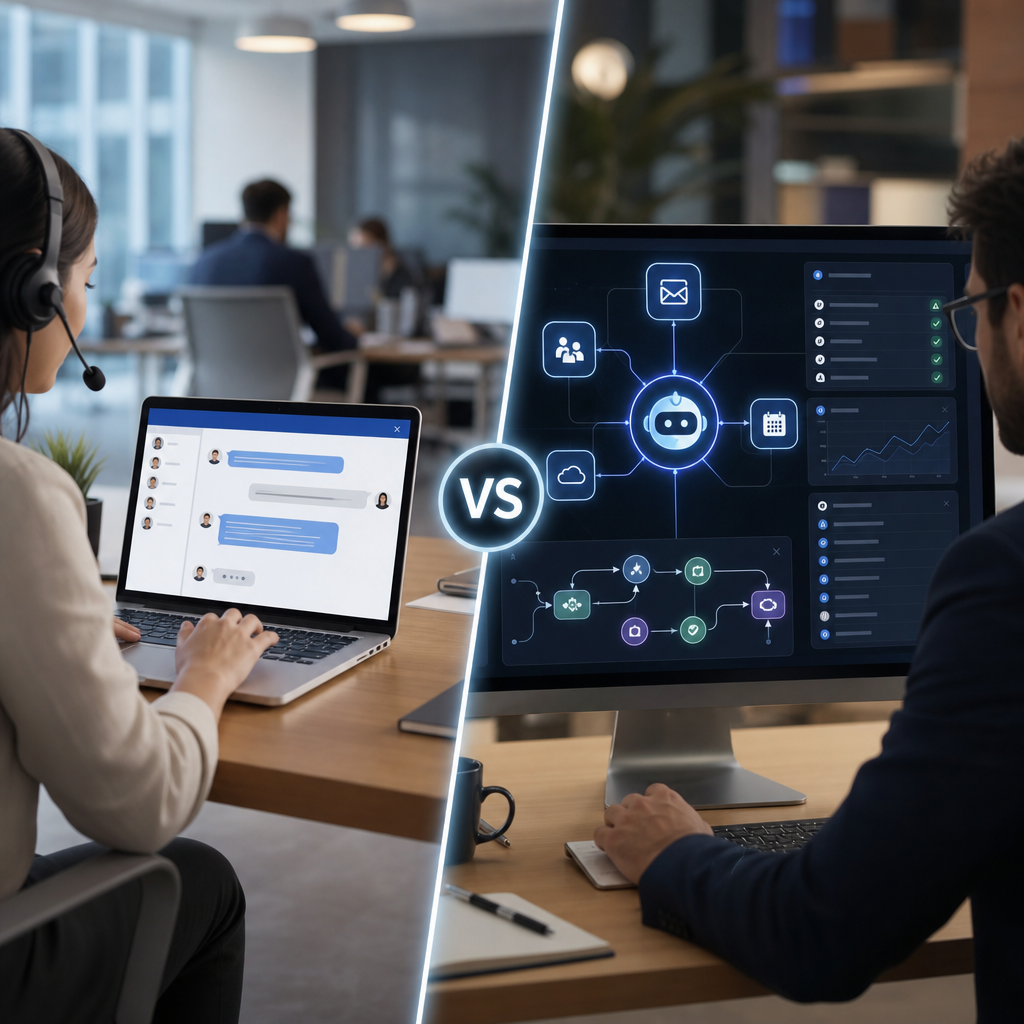
AI Chatbot vs AI Agent: What’s the Difference? (With Real Business Use Cases)
Chatbots answer. AI agents act. Here’s how to tell which one your business needs—plus real, practical examples and a simple decision guide.
August 4, 2026
Read Strategies, guides, and ideas for solopreneurs building with AI.
83 articles published
Chatbots answer. AI agents act. Here’s how to tell which one your business needs—plus real, practical examples and a simple decision guide.

A pragmatic, production-minded checklist for deploying an AI agent in a small business—covering use-case selection, data access, tool integrations, guardrails, testing, and realistic timelines from pilot to production.

In 2026, the fastest way to scale marketing output isn’t more prompts—it’s an AI content agent connected to a workflow: calendar → drafts → brand checks → approval → scheduling. Here’s how to automate content creation for a small business while keeping quality, compliance, and your voice intact.

RPA and iPaaS automate known steps. An agentic operating system coordinates AI agents across tools, policies, and approvals—so autonomous workflows can run reliably, auditable, and secure in real operations.
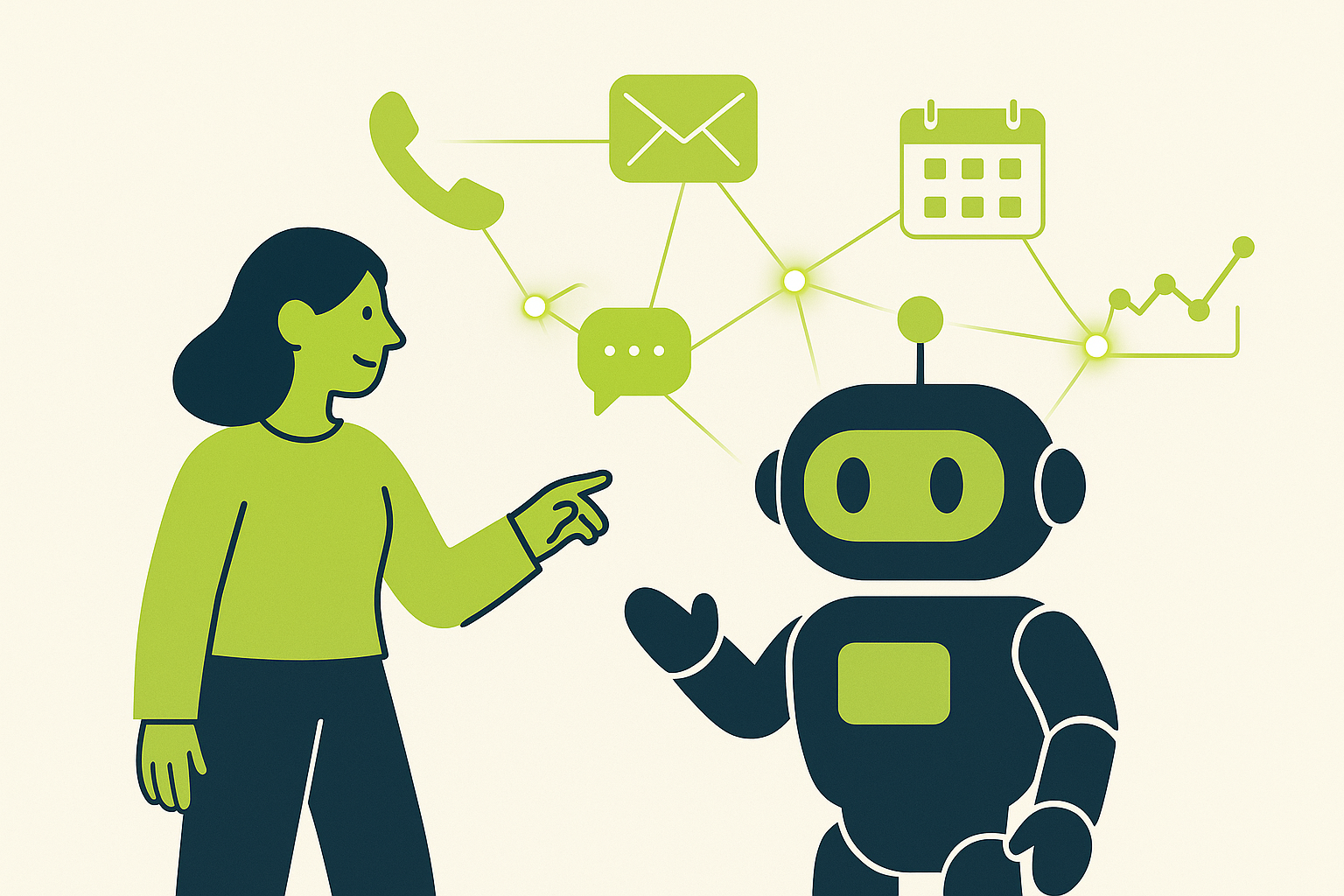
AI agents answer calls, book appointments, follow up on leads, run your inbox, chat with website visitors, and create content — covering the front-desk, sales, and admin work of a whole team, around the clock. Here are the 8 jobs they handle for a small business today.

As enterprises move from a handful of copilots to thousands of autonomous agents, “agent sprawl” becomes a governance problem—not a tooling one. Here’s a practical, velocity-friendly playbook to inventory, secure, observe, and control agents at scale.

Enterprise AI is moving past pilots. Here are the orchestration patterns we see succeed in production—plus the controls that keep multi-agent systems reliable, secure, and governable at scale.

Enterprises in 2026 aren’t asking whether AI agents can do work—they’re asking what infrastructure makes agents safe, observable, and scalable. Here’s the practical difference between agent orchestration and a true agentic operating system.

As AI agents multiply across teams, “agent sprawl” quickly becomes a security, compliance, and reliability problem. Here’s a practical, scalable way to inventory, govern, and monitor agents—without slowing product delivery.

As more teams adopt Model Context Protocol (MCP) to connect agents to tools, security moves from “prompt hygiene” to a full control-plane problem. Here’s how tool poisoning and prompt injection work in MCP-style agent stacks—and the orchestration safeguards that keep autonomous workflows safe in production.

AI pilots are everywhere. Orchestration is what turns agents into an operational capability—reliable, governed, observable, and secure. Here’s the 2026-ready starting plan.

“Agentic OS” is trending again—but enterprises need a precise definition. Here’s what an agentic operating system is (and isn’t), and the practical checklist we use to evaluate platforms for secure, observable, governed AI-agent execution.